Jan/Feb 2025 Edition, EVTOL News, Vertiflite
SAN DIEGO, CA — 30+ year veteran in aviation journalism, Robert Moorman writes a brief albeit thorough picture how Unmanned Aerospace started, where it is as of January 2025, and the innovative solutions they are already delivering.
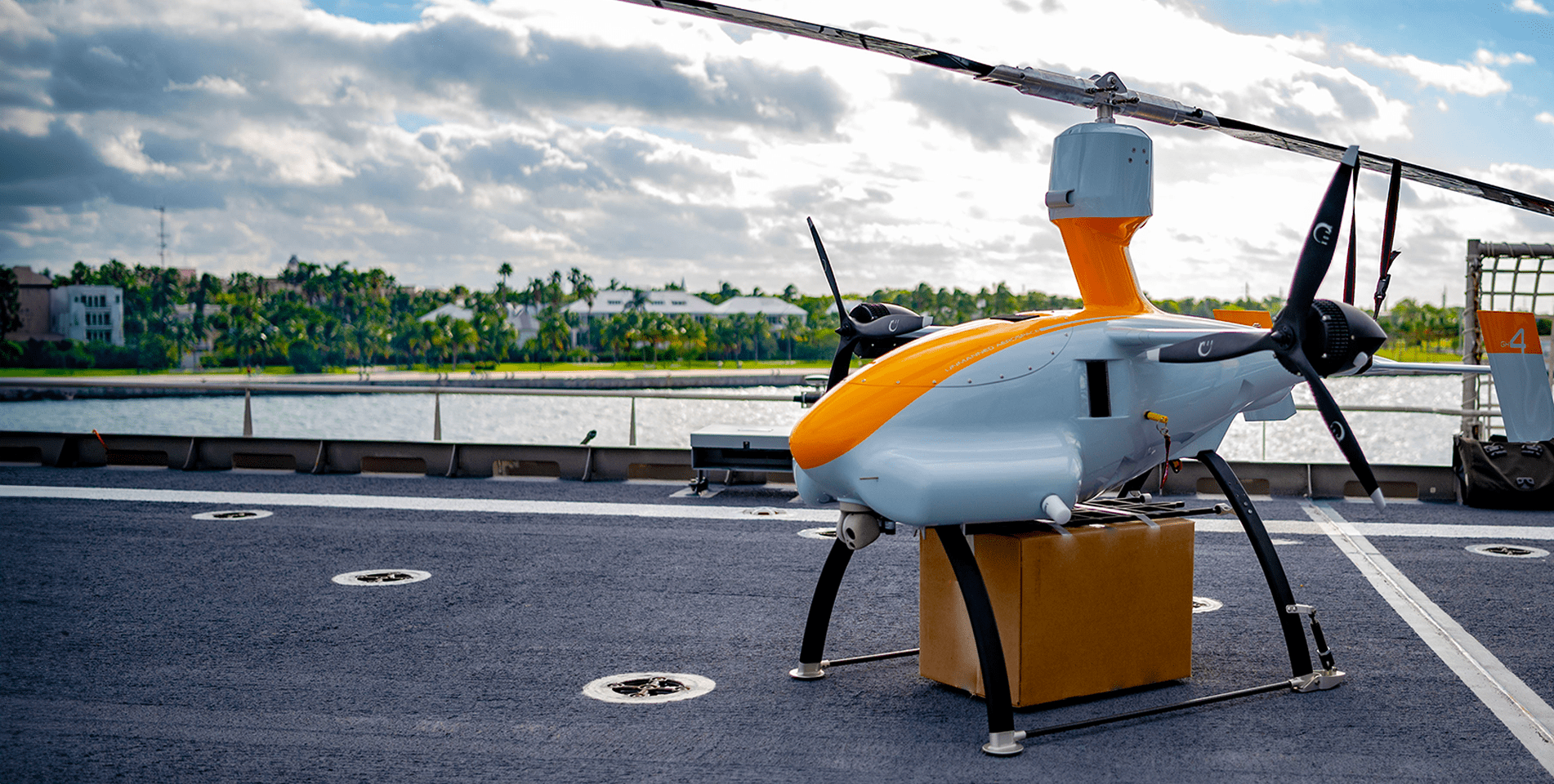
Unmanned Aerospace’s GH-4 VTOL Gyroplane is drawing high-level attention for its combination of compelling advantages and notable innovations, with U.S. Naval Forces Southern Command Fleet Advisor Dr. Christopher P. Heagney calling the aircraft “simpler, more robust and reliable… with incredible range” and capable of “thousands of flight hours before failure.” During his recent visit aboard the USNS Burlington, Heagney observed the GH-4’s operational demo firsthand, praising its elegant design, long-endurance performance, and suitability for demanding maritime environments.
Developed under a U.S. Navy-funded program, the GH-4 breaks new ground with its hydrogen-electric propulsion, patented gyroplane rotor system, and modular external payload rack that enables rapid role changes from logistics to ISR. With the ability to perform precise ship-to-ship and ship-to-shore deliveries at a fraction of the cost of traditional helicopters, the GH-4 offers defense and commercial operators an unprecedented mix of cost efficiency, mission flexibility, and rugged dependability. These innovations, combined with its scalability to larger payload variants, position the GH-4 as a disruptive force in autonomous aerial logistics.
The military’s use of small, hydrogen powered autonomous aircraft to support the air fleet is no longer a back-burner topic. The US Department of Defense (DoD) is actively looking at smaller, affordable aircraft to fill a mission gap for the warfighter.